
Call us on
+44 (0)1268 777871As rainfall intensifies and urban drainage networks face increasing pressure, buildings need practical solutions for managing stormwater at source. Blue roof systems on flat roofs provide controlled temporary attenuation of rainwater, holding it for a limited period before releasing it slowly at a predetermined rate. This approach follows SuDS (sustainable urban drainage system) principles and helps reduce peak flows into drainage networks.
Step Into the Future with a Blue Roof System
What is a Blue Roof?
A blue roof is a flat roof (or podium deck) specifically designed to provide controlled temporary attenuation of rainfall as part of a SuDS strategy. It holds stormwater for a limited time and releases it slowly through flow restrictors, reducing peak discharge rates into drainage systems. Blue roofs can be installed on new or existing buildings and are particularly useful where space for below-ground attenuation is limited.
How does a Blue Roof system work?
A blue roof system reduces the pressure of increased rainfall on drainage and stormwater management systems by temporarily storing and gradually releasing rainwater from flat roof installations.
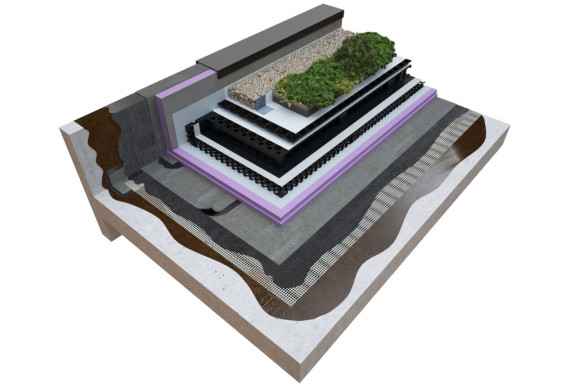
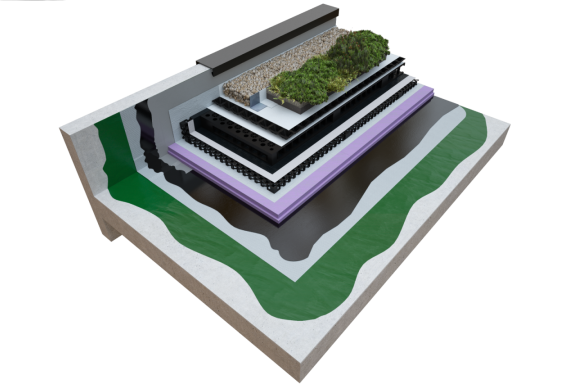
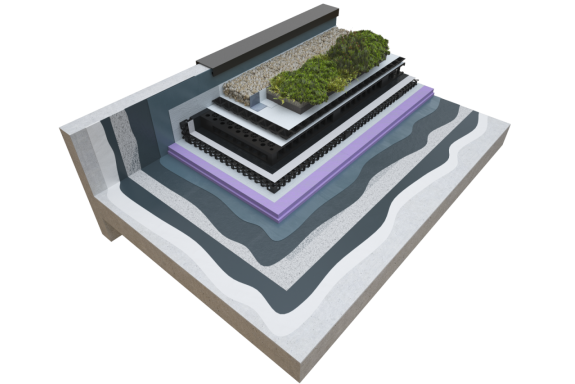
● A protective membrane shields the building structure from water
● A rainwater attenuation system consisting of storage cells collects and stores the rainwater
● Specially designed flow restrictors and drainage outlets restrict the flow of water from the storage units to release it slowly from the roof
● The discharged water flows at a controlled rate into the urban drainage systems below
● A range of finishes can be applied to complete the system
Where Can a Blue Roof be Installed?
Blue roofs can be installed on new-build or retrofit projects, subject to a structural assessment by a qualified structural engineer confirming the roof deck and supporting structure can safely carry the additional load from the design water depth. Suitable applications include flat or low-slope roofs, commercial and residential buildings, high-rise developments, and podium decks. Systems can be combined with solar PV, paving, landscaping, or other finishes.
Benefits of a Blue Roof System
● Helps manage urban flooding risks by controlling the rate at which water enters drainage systems
● Provides source control for stormwater at the point of rainfall, helping to manage runoff
● Can be combined with insulation layers in suitable projects to help manage overall roof build height
● Supports effective silt and debris management when outlets and restrictors are regularly inspected and maintained
● Ideal in urban development’s where space for below-ground attenuation tanks is limited
● Installation is possible throughout the year, subject to weather conditions and site-specific assessment
Can a Blue Roof be Installed on my Existing Building?
Yes, blue roofs are suitable for retrofit on existing buildings, provided a structural engineer confirms the roof can support the additional water load and a roofing specialist assesses the condition of the existing waterproofing. In many cases the existing membrane may need repair, overlay, or replacement to ensure long-term integrity and compatibility with the attenuation system. Early involvement of both disciplines is recommended.
What Costs are Associated with a Blue Roof?
The costs of installing a blue roof system are project specific as each ones is designed individually to meet your building's specifications and site requirements. Influencing factors can include but are not limited to:
● Structural load and weight of the system at full retention
● Total roof area, upstand heights and drainage system
● Specified finishes, and other components such as insulation and waterproofing system
Blue roofs can require maintenance throughout the year to ensure outlets and flow restrictors remain clear to sustain the expected rate of drainage.
Why are Blue Roofs being Specified?
In cities such as London, policies have been introduced to raise awareness of the impact that increased rainfall is having on urban drainage. The London Plan has explored solutions to mitigate the pressure that newly developing environmental factors such as flash flooding is having on an aging Victorian infrastructure.
In response to climate change (more intense rainfall) and urban development pressure, policies such as the London Plan and local SuDS guidance promote blue roofs as a practical source-control measure. They help developments meet planning requirements for reduced runoff rates, support adaptation of aging drainage infrastructure, and contribute to BREEAM/sustainability targets while using roof space efficiently.
How can Proteus help with your Blue Roof Requirements?
Attenu8® from Proteus is a coordinated blue roof system that supports rooftop SuDS principles and provides an integrated package for rainwater management.
Whether you are in the early planning stages or developing detailed specifications, our team provides technical advice, system design, installation support and post-completion assistance to help with your project.
To discuss your project or request a technical consultation, contact our team.
View our Blue Roof Systems - Rooftop SuDS products
Attenu8®
Attenu8®: A new standard in Blue Roof performance
As rainfall intensifies and planning demands grow, today’s buildings need smarter, compliant solutions. Proteus Attenu8® is a fully integrated attenuated blue roof waterproofing system that meets the...
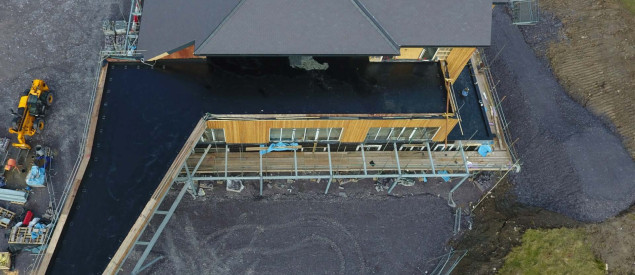
Cold Melt®
Cold Melt® is a two-part elastomeric polyurethane membrane that delivers seamless leak protection for protected roofs, including zero fall designs. Incorporating recycled rubber crumb and castor oil, this BBA-certified system (Certificate 23/6654)...
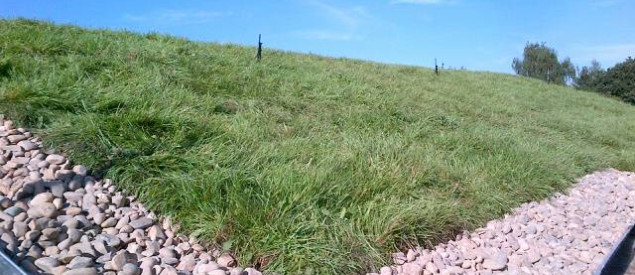
Pro-Living®
Proteus Waterproofing offers a range of green, brown and blue roofs. Pro-Living® roofs can provide ecological benefits, offering an effective and practical use of space.
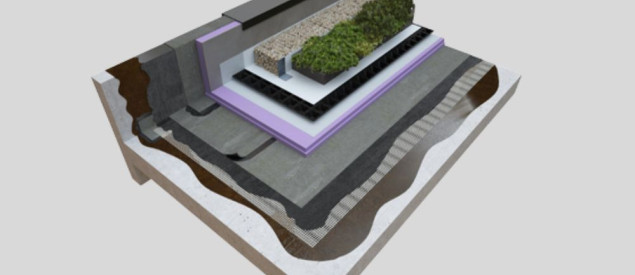
Proteus Hot Melt®
A durable waterproofing solution for contemporary roofing needs, BBA certified as an effective barrier for the service life of the roof.
Case studies
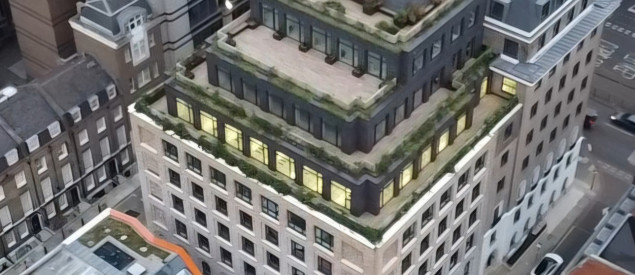
Marylebone House
Located in Central London near Marylebone Station, this 1930s neo-Georgian building, known as Marylebone House, has been completely transformed into 75,000 square meters of modern, sustainable workspace.