
Call us on
+44 (0)1268 777871


Located in Central London near Marylebone Station, this 1930s neo-Georgian building, known as Marylebone House, has been completely transformed into 75,000 square meters of modern, sustainable workspace.
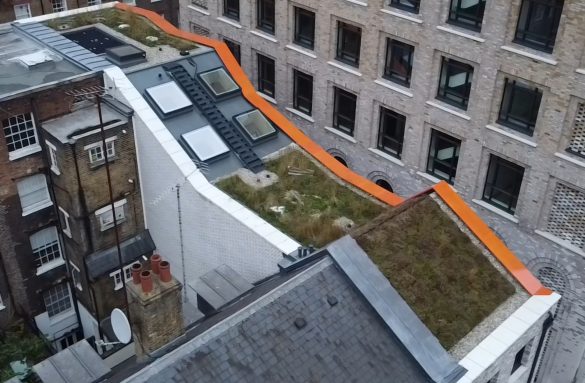
This extensive project combined high-end interior design with smart architectural features. The building was re-imagined with three additional storeys set back on the upper levels, and tiered extensions to the south now featuring stepped, landscaped terraces. A key focus of the renovation was sustainability, wellness, and well-being.
This was achieved by working with our Proteus Approved Contractor to reduce the building’s environmental impact and incorporate specific design elements. The project included a significant refurbishment of the roof and terrace areas, utilising “Blue” and “Green” Roof systems with innovative insulation to create a more eco-friendly and sustainable building.
Key Challenges & Solutions
The project faced several technical and design challenges, all of which required innovative solutions to meet the client’s vision and comply with strict building standards.
Sustainable Design & Blue Roof Systems
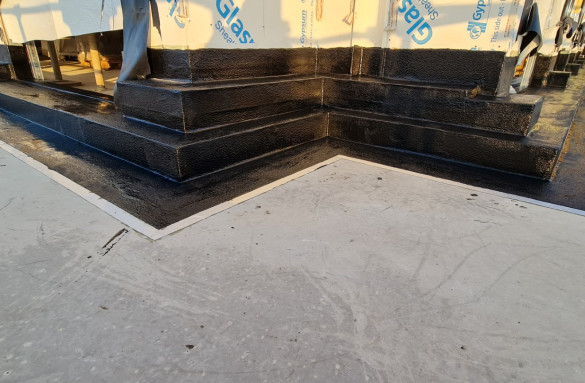
A key challenge was integrating sustainable environmental solutions while meeting complex waterproofing and thermal requirements. The project included a Blue Roof system, designed to manage rainwater runoff. This required precise calculations for the roof’s capacity and the depth of its attenuation zones. A major obstacle was the limited space available for insulation due to the design of the terraced areas, which included hard landscaping, pedestals, and green roofs. To overcome this, our Technical Team conducted an area-weighted U-value calculation, using a combination of different waterproofing and insulation products. This customised approach ensured that the project would meet all its roofing requirements and comply with relevant fire and building codes.
Aesthetic and Technical Requirements
The project also had a specific aesthetic requirement: all roof flashings needed to be hidden from view. The space between the structural slab and the finished floor was extremely tight, making it difficult to achieve the thermal targets without significantly increasing costs. To solve this, each terrace’s thermal break course was designed individually. The team collaborated directly with manufacturers to create custom termination points within the framework, allowing the waterproofing to be completed while keeping all flashings completely concealed.
Multiple Product Applications
Because the building had multiple levels with different structural elements, a single solution was not an option. Each area required a different approach, involving a wide range of products. The team planned each section individually to ensure the different solutions and materials would blend together seamlessly.
Conclusion
The project was a resounding success, earning Proteus Waterproofing significant recognition from the industry. We received a “Highly Commended” award from the Liquid Roofing and Waterproofing Association (LRWA)and was by the National Federation of Roofing Contractors (NFRC). These honours specifically celebrated the project’s innovation, product quality, and unwavering commitment to sustainability and reducing its environmental impact