
Call us on
+44 (0)1268 777871


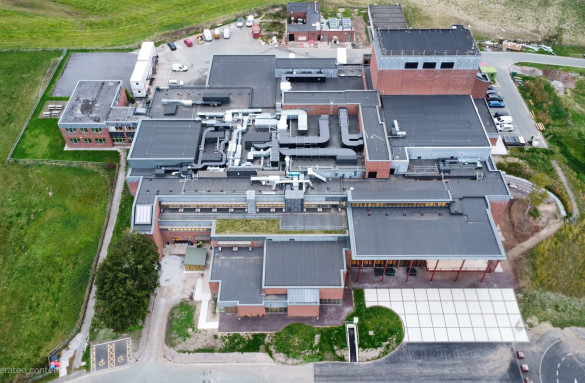
Theatr Clwyd is a major arts complex overlooking the town of Mold in Flintshire, North-East Wales. Originally constructed in 1976 by Clwyd County Council, the building was designed as a sprawling mid-1970s structure to accommodate both theatre performances and television production spaces, primarily using red brick in its exterior.
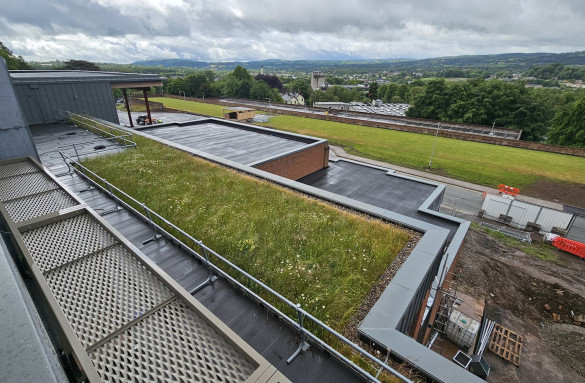
Theatr Clwyd underwent a major redevelopment in 2025, which repurposed much of the existing structure, with selective demolitions and additions to enhance functionality and environmental performance. Proteus Waterproofing was commissioned to provide a comprehensive condition report, continued support and expertise throughout the project.
KEY CHALLENGES
Removal of existing waterproofing and decking
All existing waterproofing systems were fully stripped from the various roof areas. During this process, the team discovered that sections of the old chipboard and plywood decking had suffered significant water damage over time. These defective materials were removed and replaced to provide a substrate designed to support the new waterproofing system.
Complex roof interfaces and detailing
With numerous plant upstands, penetrations, and service routes across the various roofs, the project involved extensive interface detailing. Each junction between the new waterproofing system, roof penetrations, and existing building elements had to be carefully designed and installed to ensure they would remain watertight.
Structural upgrades to timber joists
The introduction of upgraded thermal insulation, a new photovoltaic (PV) array, and multiple large air handling units significantly increased roof loadings. As a result, the existing timber joists required strengthening to accommodate the additional weight and ensure structural integrity.
Access and programme constraints
Access to the roof areas was limited by the building’s ongoing operations and restricted working zones. Work sequencing had to be carefully managed between the various trades to maintain safe site conditions. Despite these constraints, the installation programme was completed efficiently and within the client’s timeframe.
Thermal performance and compliance
The project’s upgraded insulation scheme was designed to achieve U-values in line with current Building Regulations. Balancing these thermal requirements with the constraints of existing roof heights, plant supports, and interface levels required careful coordination between the design and installation teams. The technical manager for Proteus Waterproofing played a large role in how these details were addressed.
CONCLUSION
The technical team at Proteus Waterproofing were always on hand to help with any questions regarding all aspects of the installation. The use of multiple Proteus products including Proteus Pro-Felt® waterproofing membranes, Proteus Pro-Therm insulation and Pro-Living® green roof range has ensured reliable performance with consideration for future environmental impacts. Our technical team made regular site visits to ensure the project was completed within the client’s timeframe.